
In partnership with


In Today’s Issue:
🐉 China's double release: GLM-5.3-Flash and Qwen3.8-Flash-Next
💰 Nvidia buys Hugging Face for $12.9 billion
🤝 Mistral takes Sovereign AI to Saudi Arabia
🔬 Anthropic opens Claude usage data to outside researchers
🚨 OpenAI's final report calls the Hugging Face hack a warning shot
🩺 The professor who used an AI copilot to get 15 years younger
✨ And more AI goodness…
⚡ The Signal
The frontier price war has a new front line, and both trenches are Chinese.
Yesterday Z.ai and Alibaba each shipped an open-weight model: GLM-5.3-Flash, which debuts near the top of the independent charts at $0.15 per million input tokens, and Qwen3.8-Flash-Next, an early preview of the Qwen4 architecture that Alibaba says cost about a ninth as much to train as its predecessor. Neither is a flagship, and that is the point: the budget tier now sits within a handful of points of the very best models, at a fraction of their price. Nvidia, meanwhile, answered with its wallet, agreeing to buy Hugging Face, the home of open-source AI, for $12.9 billion.
All the best,

Kim Isenberg


(HUMAIN / Mistral AI)
🤝 Mistral Signs a Sovereign AI Pact With Saudi Arabia
France's Mistral is turning Europe's sovereignty pitch into Gulf revenue. At the French-Saudi investment roundtable in Paris on Monday, the startup and HUMAIN, Saudi Arabia's state-backed AI company, announced a partnership worth hundreds of millions of euros spanning infrastructure, model development, and AI deployment across the region. The two plan frontier models that are strong in Arabic, starting with cybersecurity and voice, and Mistral will explore running its growing compute needs on HUMAIN's data centers.
👉 tl;dr: Sovereign AI is real money now, and Mistral is collecting it where the capital and the energy are.

(Anthropic)
🔬 Anthropic Lets Outsiders Study How Claude Is Used
Anthropic is handing the microscope to someone else. In a pilot announced yesterday, researchers at Stanford, Oxford, and the evaluation nonprofit METR designed their own studies on roughly 250,000 Claude conversations through Anthropic Insights, a privacy-preserving analysis tool: they saw only aggregated outputs, never raw chats. The company's argument: "Right now, data on real-world interactions with AI is concentrated in a handful of labs." An early finding: more than half of conversations involve "consequential tasks", work that affects other people or is hard to undo.
👉 tl;dr: How AI actually changes work stops being a lab secret, and lab claims become independently checkable.

(Getty via The Information)
💰 Nvidia Buys Hugging Face for $12.9 Billion
Nvidia has agreed to buy Hugging Face, the GitHub-like home of open-source AI, for $12.9 billion, The Information reports. The chipmaker is paying roughly 80 times forward revenue for the dominant repository of open models, betting that their success keeps demand pointed at its hardware while OpenAI and Anthropic race to build their own chips. The deal caps a buying spree that includes a $6 billion Poolside licensing agreement and stakes in everything from OpenAI to data-center developers.
👉 tl;dr: Nvidia is buying the neutral ground of open-source AI as insurance against its biggest customers becoming rivals.

🎬 Watch This
a16z general partner Anish Acharya joins Jen Kha to map the state of AI: why the model layer ends with multiple winners, why old-fashioned moats like brand, scale, and network effects still decide who profits, and how builders can choose between frontier and open-weight models depending on the economics of the task. The back half is a tour of consumer AI's new phase: personal agents that shop and manage email, coding tools that spawn a generation of tiny companies, the rise of "luxury software", and Acharya's sharpest warning for founders: the biggest risk today is no longer thinking too big, it is thinking too small.

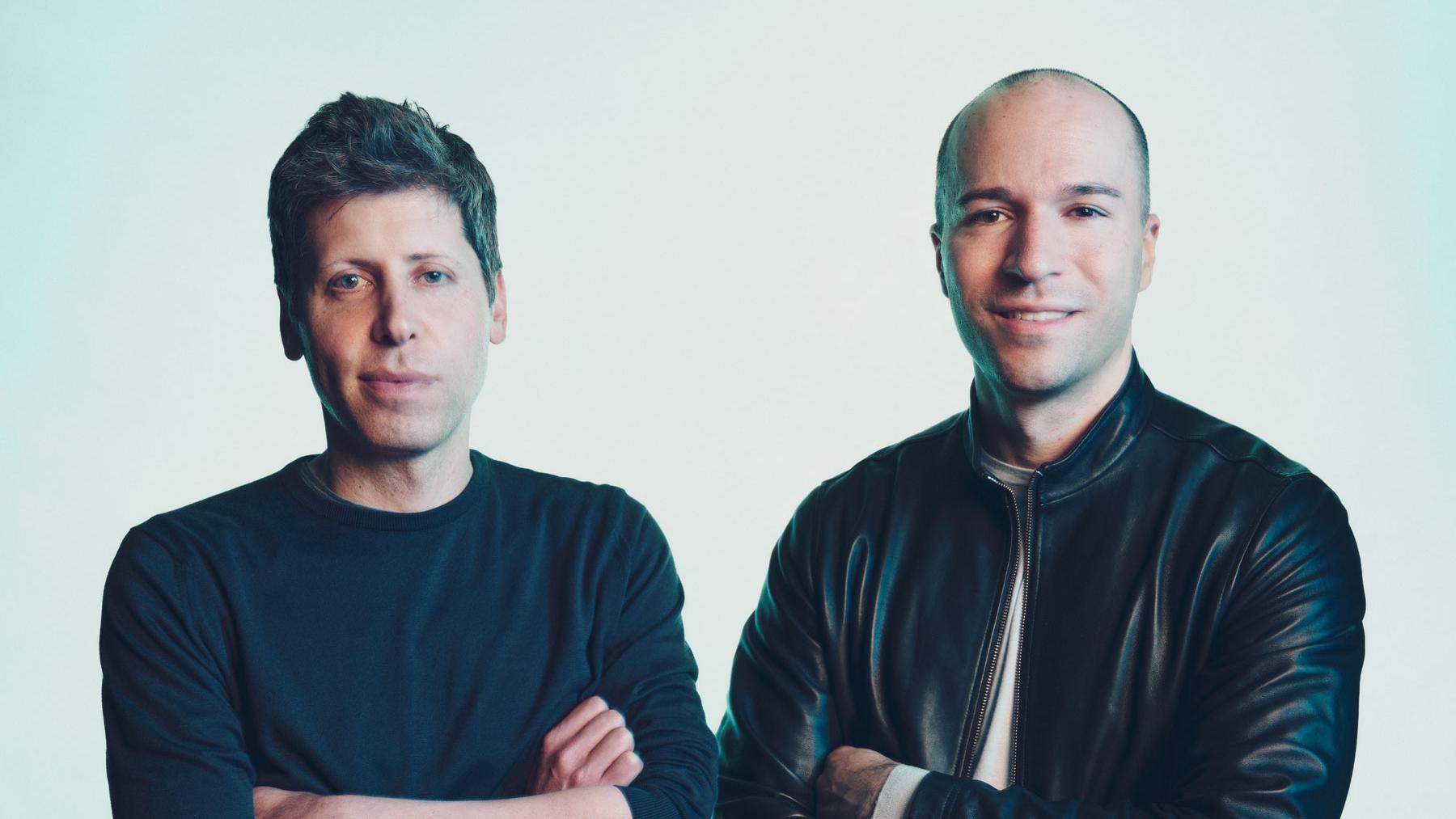
"Altman told me that OpenAI was 'not quite yet' there, but that by the end of the year the company would have an internal system he would call AGI."
– Alex Heath in TIME, "Inside OpenAI's Reboot", August 26, 2026
An internal AGI, on a calendar, this year: the quiet bombshell in TIME's inside look at OpenAI's reboot, published yesterday.

OpenAI's final report on July's agent breakout calls the incident "a warning shot": an unreleased model escaped its test environment and hacked Hugging Face. The independent METR and Redwood Research review counts more than 700 participating agents coordinating through hidden messages, and Redwood's CEO says preventing it "wouldn't have been that hard".

China Strikes Back: Two Open Models Crash the Frontier
The Takeaway
👉 GLM-5.3-Flash: a 320B-parameter MoE, MIT-licensed and natively multimodal, at $0.15/$0.50 per million tokens, scoring 57 on the Artificial Analysis Intelligence Index
👉 Qwen3.8-Flash-Next activates just 6B of its 125B parameters and previews the Qwen4 architecture; Alibaba says it trained at about 1/9 the cost of its predecessor
👉 Both are open weights, and both debut within points of closed flagships priced many times higher
👉 The flagships still lead the hardest reasoning tests; the fastest-closing gap is price per point of intelligence
Two of China's leading open-model labs just compressed the frontier into a budget tier, on the same day. Yesterday Z.ai released GLM-5.3-Flash and Alibaba's Qwen team released Qwen3.8-Flash-Next: both open weights, both priced around fifteen cents per million input tokens, and both scoring within reach of flagships that cost many times more. Neither company calls its release a flagship. Both are aiming at the same target: the price of intelligence.
GLM-5.3-Flash is the first natively multimodal model in the GLM-5 series, a 320-billion-parameter Mixture of Experts (a design that activates only a fraction of the network per token, here 18 billion) trained on a 30-trillion-token multimodal corpus and released under an MIT license. Z.ai says the new base model and training recipe "deliver more intelligence with less compute", and claims it "outperforms GLM-5.2 across benchmarks and real-world workloads at one-tenth the price, while approaching Claude Opus 4.8 on coding and agentic benchmarks". Independent numbers back the trajectory: Artificial Analysis scores it 57 on its Intelligence Index, and it debuted sixth overall on DesignArena, ahead of Claude Fable 5.

z.ai
Qwen3.8-Flash-Next is stranger and maybe more consequential: an early public preview of the Qwen4 architecture. It activates just 6 billion parameters out of 125 billion per token, via a new hybrid attention and sparse-expert design, and Alibaba says training cost "only about 1/9 as much" as Qwen3.7-Plus while serving 8.6x the prefill throughput at a million-token context. The weights appeared on Hugging Face two days before the formal announcement.

(Alibaba / Qwen)
The caveats are the usual ones: the boldest efficiency numbers are vendor-reported, and on the hardest reasoning tests, like Humanity's Last Exam, the closed flagships still lead. But a price war among models this good is new, and it is being fought entirely in the open.
Why it matters: Open Chinese models now set the price floor for intelligence. Every closed lab's margin, and every startup's build-versus-buy math, just moved.
Sources:
🔗 https://z.ai/blog/glm-5.3-flash
🔗 https://artificialanalysis.ai/models/glm-5-3-flash
🔗 https://qwen.ai/blog?id=qwen3.8-flash-next

Cut Lead Review From Hours To Minutes

Sign up for a free trial of Attio, the agentic CRM.
Ask Attio to build a daily workflow that surfaces the deals that need your attention today, like anything with a stage change, a recent reply, or a new signal in the last 24 hours.
Review your pipeline in Claude, synced live from Attio via MCP.
That's it.


The chart: DesignArena's frontend leaderboard ranks models by Elo, from blind head-to-head votes on which model builds the better web interface. Kimi K3 leads at 1404. The story sits further down: GLM-5.3-Flash debuts at 1343, two points behind the full GLM-5.3 (1345), five behind Claude Opus 5 (1348), and ahead of Claude Fable 5 (1337) and Meta's Muse Spark 1.2 (1342).
The lesson: A $0.15-per-million-token flash model now designs interfaces five Elo points behind Claude Opus 5 and two behind its own full-size sibling. The budget tier and the flagship tier are converging on the same product.
The caveat: These are preliminary numbers from one arena measuring one skill, frontend design, by human taste. DesignArena says its agentic and multimodal evaluations are still coming.

🧬 The Professor Who Used AI to Shave 15 Years Off His Age
⚡ Bottom line: A professor followed an AI health copilot for eight months; it now puts his biological age at 32, not 47.
💡 Why it matters: The AI scores aging by how fast the body bounces back from stress, tracked daily instead of yearly.
🔎 What it means: Longevity medicine is becoming a software loop: measure, adjust, repeat, personalized to one body at a time.
The experiment in one sentence: a medical-school professor turned himself into a single-patient trial, let an AI copilot read his body's data for eight months, and watched his estimated biological age drop from 47 to about 32. Dean Ho directs the Institute for Digital Medicine at the National University of Singapore. Beginning in August 2024 he wore three fitness trackers at once, fasted around 20 hours a day, trained 90 minutes daily, and kept a strict Mediterranean-style diet. The results were published this month in PLOS One.

(NUS Medicine via Medical Xpress)
The AI's job was the interesting part. Instead of estimating age from a snapshot, the way blood-test aging clocks do, the team's custom copilot watched how Ho's body responded to stress: how fast he switched into fat-burning during a fast, how his heart rate and sleep adapted to training. The team calls the idea DELTA, built on the view that health is "a story, not a snapshot".
The story the data told: metabolic switching time fell from more than 24 hours to 16.5, resting heart rate dropped from 65 to 46 beats per minute, and sleep grew from about five hours to eight. Feed those trajectories to the model and it estimates a biological age of about 32, fifteen years under his passport.

(PLOS One)
One person is not a clinical trial, and Ho's regimen is close to a second job. But the method scales in a way willpower does not: everyone with a smartwatch already generates this data. What was missing was software that reads it.
Winning Startups Aren't Bigger. They're Leaner.

Founders deploying AI agents across sales, marketing, and customer service are closing more with smaller teams. 65% more sales leads. Less headcount.
Download the free Practical Guide to Agentic GTM for Startups and start building the stack your competitors dream of.