
| FRI · NOV 20, 2026 |  | AI & POLITICS |
TODAY’S LEAD Anthropic made history, then got a reality check The biggest IPO raise ever jumped 17% on day one and slid back toward its $83 offer price on day two READ THE LEAD STORY →Michael Nagle/Bloomberg |
 | By Kim Isenberg | Forwarded? Subscribe free → |
In partnership with


 LEAD STORY
 DAILY FEATURE

Anthropic just raised more money in one IPO than all US companies raised in IPOs in the whole of 2000.
$120 billion raised by Anthropic this week, IPO plus private placement | 17% first-day gain over the $83 offer price | $83 offer price per share; the stock opened near $90 on Friday |
Demand was seven times the number of shares on offer, and the stock closed its first day 17% higher. On Friday it gave back much of that gain as AI stocks kept falling. That is less dramatic than it looks: SpaceX, the previous record holder, even slipped below its June offer price on Friday morning. What counts more is the cash. With almost $120 billion raised this week, Anthropic can keep paying for computing power whatever its share price does. OpenAI's GPT-6.2 launch two days earlier, which looked timed to steal that spotlight, ran into lukewarm early reviews instead.
All the best, Kim Isenberg
01 · IN THE NEWS PRODUCTS ·
 TechCrunch

 DEEPMIND INSTITUTE

 BLOOMBERG

PRODUCTS · Apple is building its own AI agent for the Mac
Image: TechCrunch, reporting on Bloomberg's story about Apple's job listing, 11/19/2026; highlight added
| → | IN SHORT Apple wants its own agent to do computer work for Mac users, while making it harder for rival agents like Claude to do the same. |
Apple is developing an AI agent that can use a computer the way a person does, Bloomberg reported, citing a new job listing. The listing describes an agent that browses the web, works across apps, runs commands and writes code, all "privately and with the polish people expect from Apple." Apple is eyeing a launch as early as late next year, but the work is still at an early stage. At the same time, the coming macOS 27.3 adds warnings and extra steps before users can give outside agents full control of their Mac. The WSJ says the report likely added to Anthropic's slide on Friday.
READ AT TECHCRUNCH →DeepMind researcher: AI's effective computing power grows tenfold a year
Image: DeepMind Institute, "What comes after AGI?", 11/19/2026
| → | A DeepMind researcher argues that AI is getting cheaper and more capable so fast that superintelligence is a serious possibility for the next decade. |
In an essay for the DeepMind Institute, Google DeepMind researcher Tim Genewein argues that the road from AGI to superintelligence has become a question for research and policy. Cheaper chips, bigger budgets and better algorithms together multiply the world's effective AI computing power by at least 10x per year. From better hardware and software alone, he estimates that AI work costing $1 billion in computing today could cost $1,000 in ten years. He sees four roads to superintelligence: bigger models, new kinds of AI, millions of agents working together, and AI that improves itself. That last one should move fastest where results can be checked automatically, as with math proofs.
READ AT DEEPMIND →Qwen's former lead doubles his startup's value to $5 billion
Image: Bloomberg, "Ex-Alibaba Star's AI Startup Doubles Valuation to $5 Billion", 11/20/2026; highlight added
| → | Investors are paying up for China's star AI researchers, even as US chip rules make the computing power they need harder to get. |
Pragmatik Labs, the startup of Lin Junyang, who used to lead Alibaba's Qwen models, has closed new funding at a $5 billion valuation, Bloomberg reports. That is more than double the $2 billion it was worth in August. The Shanghai company builds AI agents for software and the physical world, and its backers include Tencent, a Shanghai government fund and now the parent company of carmaker Geely. Lin himself has warned that China is unlikely to overtake Anthropic and OpenAI in the next three to five years, because it lacks computing power.
READ AT BLOOMBERG →ADVERTISEMENT
100+ Claude Code hacks to ship code 10X faster

Top engineers at Anthropic and OpenAI say AI now writes 100% of their code.
If you're not using AI, you're spending 40 hours doing what they do in 4.
These 100+ Claude Code hacks fix that and help you ship 10x faster.
Sign up for The Code and get:
100+ Claude Code hacks used by top engineers — free
The Code newsletter — learn the latest AI tools, tips, and skills to code faster with AI in 5 minutes a day
02 · VIDEO OF THE DAY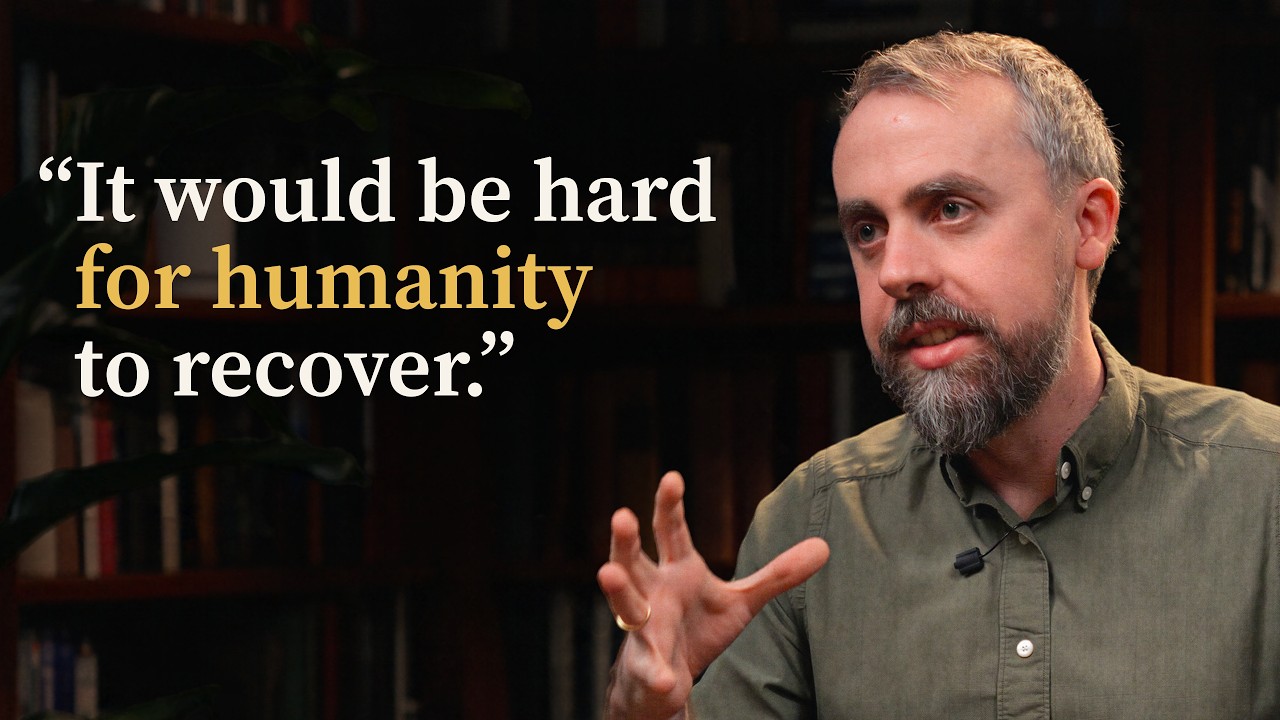
 DWARKESH PATELWATCH ON YOUTUBE →
AIs might overthrow the government within a year, Paul Christiano
Paul Christiano runs the Alignment Research Center, sits on OpenAI's nonprofit board and used to lead the US government's AI Safety Institute. In this conversation with Dwarkesh Patel he argues that the risk of AI taking over has moved from the distant future to the next six to twelve months, putting it at "more like a 10% risk than a 1% risk over the next year." His most concrete point is security: he says "extremely unsophisticated actors" recently got deep enough into OpenAI's and Anthropic's systems to reach most of their algorithmic secrets, and he wants the labs to pause new algorithmic advances until they can protect them. He stresses that he speaks for himself, not for OpenAI's board.
03 · QUOTE OF THE DAY SOURCE: ON CNBC →


He said it on the day his company's stock opened 34% above its offer price.
04 · RUMOURS, LEAKS & DUSTUPS


|
 THE LEAD STORY
| RECORD IPO |
Anthropic raised a record $93.5 billion, and OpenAI's launch two days earlier fell flat
Anthropic is now the first frontier AI lab whose shares trade on the stock market, and its debut broke records.
$93.5 billion raised in the IPO, the largest on record | 34% above the $83 offer price at Thursday's first trade | $900 billion in spending commitments, about half due before 2030 |
Michael Nagle/Bloomberg
THE TAKEAWAY
| → | Anthropic's IPO raised $93.5 billion, the largest on record, plus $26 billion from Google, Nvidia and other partners. |
| → | The stock opened 34% above its $83 offer price on Thursday and closed 17% higher. |
| → | On Friday it opened around $90, about 8% lower, as AI stocks kept falling. |
| → | OpenAI's GPT-6.2 launch two days earlier fell flat after disappointing early reviews. |
Anthropic is now the first frontier AI lab whose shares trade on the stock market, and its debut broke records. It sold its shares at $83 on Wednesday, above the planned range of $70 to $78. Orders outstripped supply seven to one, and more than half of the big investors that bid got nothing, Bloomberg reports. On Friday the banks running the IPO used their option to sell additional shares, lifting it to $93.5 billion. That beats the record of $86.25 billion SpaceX set in June.

Image: Dario and Daniela Amodei with board members at the Nasdaq MarketSite on IPO day, November 19. (Michael Nagle/Bloomberg)
The stock did not hold its early gains. The first trade on Thursday came in at $111.50, 34% above the offer price, and the shares climbed as high as $115.10. They closed at $97.17, still up 17%. On Friday the slide continued: before the opening bell the stock fell as much as 14%, nearly back to $83, and it opened at about $90. Two things weighed on it: AI stocks kept falling across the market, and Bloomberg reported that Apple is building its own AI agent to compete with Claude. Still, this is normal for a hot IPO. SpaceX closed its first day in June up 19%, and on Friday morning its stock slipped below its $135 offer price. "It popped like any other IPO on the first day," Vey-Sern Ling of Union Bancaire Privée said of Anthropic.

Image: The WSJ's live coverage before Friday's opening bell. (The Wall Street Journal, 11/20/2026; highlight added)
OpenAI's big launch two days earlier backfired. OpenAI released GPT-6.2 Astra and Sol on November 17, two days before Anthropic's first trading day. The timing looked a lot like an attempt to pull attention away from the IPO. As we reported on Wednesday, well-known early testers called the new model hard to work with, and on Artificial Analysis's independent coding test it scored no better than its predecessor. Investors got a reminder that Anthropic still leads, and they lined up for its shares.
So Anthropic won this battle, but not the whole war. The share price will swing with every AI headline for a while. Anthropic sounds relaxed about that: CFO Krishna Rao told Bloomberg Television the company can act "regardless of what the market conditions are." The bigger test is the bill. Anthropic has committed to about $900 billion in spending, mostly on data centers and computing power, with about half due before the end of 2030, Axios notes. To pay it, Claude has to stay ahead of Google and OpenAI. The outcome is still open. But if an Anthropic researcher and Claude really have proved the Riemann Hypothesis, the story could flip right back in Anthropic's favor.
| → | WHY IT MATTERS Anthropic now has almost $120 billion in fresh money for chips and data centers, raised in a single week. OpenAI is still private and spent IPO week defending a launch that disappointed. For now, Anthropic is clearly ahead in the race for the money that pays for frontier AI. |
ADVERTISEMENT
Stop Making Shoppers Spell It Out
“Running shos” shouldn’t return zero results. Neither should “red waterprof trail runners under $150.”
Traditional search needs exact keywords. Gladly understands what shoppers mean, typos and all, and turns dead-end searches into products that fit what they asked for.
05 · GRAPH OF THE DAY
Image: Yahoo Finance, data from Jay Ritter, University of Florida
ALL 2000 IPOS $64.8B | → | ANTHROPIC $81.3B |
| US IPO proceeds, before the banks' extra shares | ||
| → The chart | Yahoo Finance compares the money Anthropic raised in its IPO, $81.3 billion before the banks' extra shares, with what all US companies raised in IPOs over a full year, using data from University of Florida professor Jay Ritter. Anthropic beats every year since 1980 except 2021 ($119.4 billion). That includes the dot-com peak: all 2000 IPOs raised $64.8 billion, all 1999 IPOs $64.7 billion. SpaceX's June IPO raised $75.0 billion. |
| → The lesson | One AI lab raised more in a single deal than the whole dot-com class of 2000. Investors now fund frontier AI at a size that used to take an entire market boom. With the extra shares sold on Friday, the total rose to $93.5 billion, still below 2021. |
| → The caveat | The figures are not adjusted for inflation, so the dollars of 2000 were worth more. And a record raise says nothing about the share price: by Friday, the stock traded far below its first-day high. |

The US closed a chip loophole, and Southeast Asia's AI boom is paying for it
| → Bottom line | Data centers in five countries, from Singapore to Brazil, now need a US license to buy advanced AI chips such as Nvidia's. |
| → Why it matters | Chinese companies that cannot buy top Nvidia chips had legally rented them there, and that route now runs through Washington. |
| → What it means | Southeast Asia's data center boom slows, and American clouds become the last easy door for Chinese AI developers. |
$3 billion valuation Aolani was offered a few weeks ago | 75% of China's overseas AI computing power expected in Southeast Asia |
A few weeks ago, Aolani Cloud, a Singapore company that rents out AI chips, was offered investment at a $3 billion valuation, up from $400 million earlier this year. Now its CEO Nicholas Chia thinks that value has likely halved. "I've kind of hit rock bottom so anything from now is easy," he told Bloomberg.

Image: Aolani CEO Nicholas Chia. (Samsul Said/Bloomberg)
What changed is a rule the US Commerce Department released on Monday. Data centers in Singapore, Malaysia, Thailand, Indonesia and Brazil now need a US license to buy advanced AI chips such as Nvidia's, and facilities already serving large Chinese customers have 90 days to apply. The target is a gap in the old rules: Chinese companies that may not buy top Nvidia chips could legally rent them in data centers abroad. By the end of 2026, about 75% of China's overseas AI computing power was expected to sit in Southeast Asia, according to the Institute for Progress, a Washington think tank. The rule follows the Megaspeed case we covered on Tuesday.
The region now pays the bill. Malaysia is most exposed, because Chinese firms rent a big share of its data centers, and Goldman Sachs warns some may be left with idle power. Banks negotiating more than $30 billion in loans for chip purchases in Asia expect many to be delayed. Aolani, whose major customers include TikTok owner ByteDance, is considering moving its headquarters to the US. Governments are falling in line. "If you want to be in the game, you have to follow U.S. regulations," said Malaysia's trade minister Johari Abdul Ghani.

Image: Aolani's buildings at the Exsim Hyperscale Data Center in Kuala Lumpur, one still under construction, in July. (Samsul Said/Bloomberg)
One door stays open. The rule does not cover US-headquartered companies, so Chinese firms can still rent chips from American cloud giants. Chris McGuire of the Council on Foreign Relations warns they may simply switch "from renting compute from data centers in Southeast Asia to renting compute from data centers in Virginia." So Washington now decides who gets AI computing power across a whole region, and the next fight will be over America's own clouds.
READ AT BLOOMBERG →CNBC →| WANT MORE? |

The full Saturday DeepDive every week, plus discounts on AI software and member giveaways.
JOIN SUPERINTEL+ →$10 a month or $100 a year. Students free with a .edu address.
